Low Carb Cashew Chicken Stir Fry with Red Cabbage
Takeout cashew chicken is great right up until you look at the nutrition label and remember why you stopped ordering it.
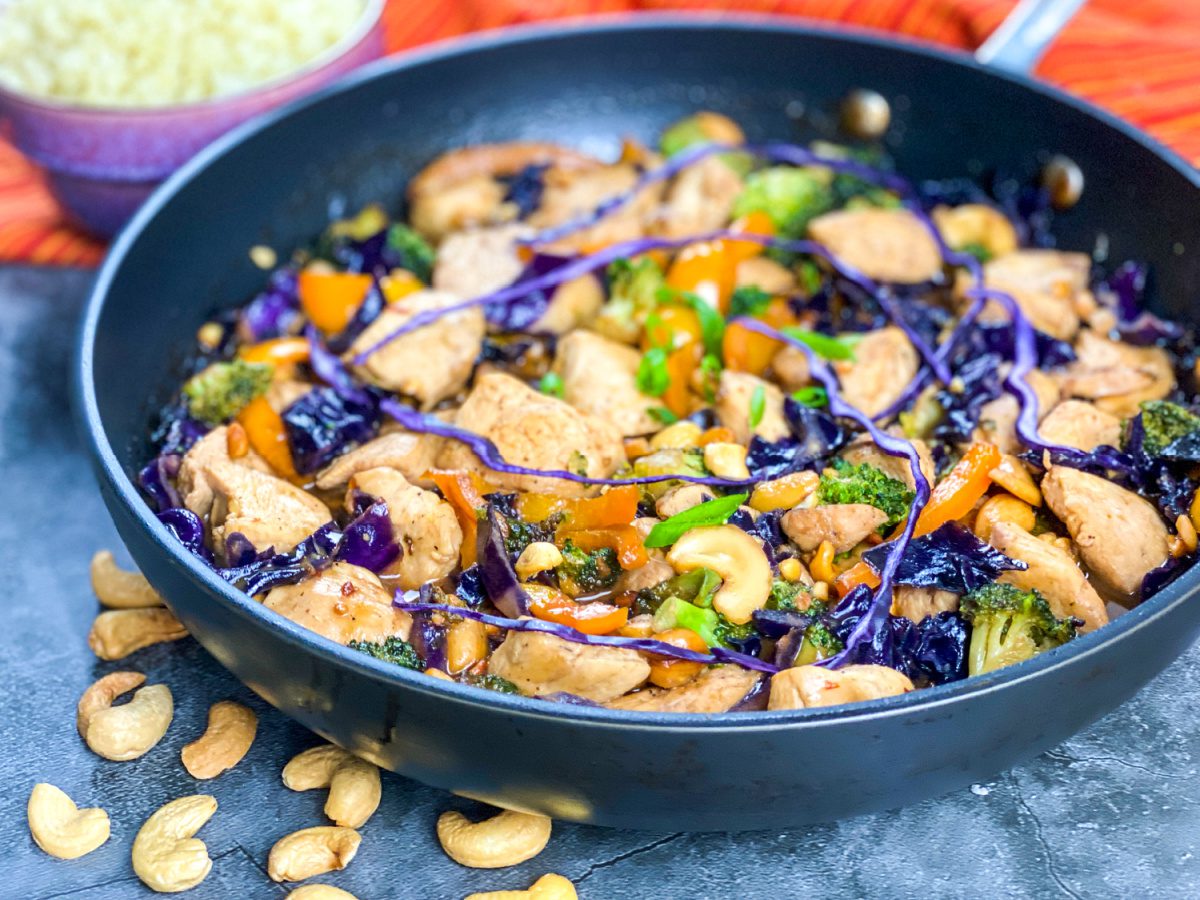
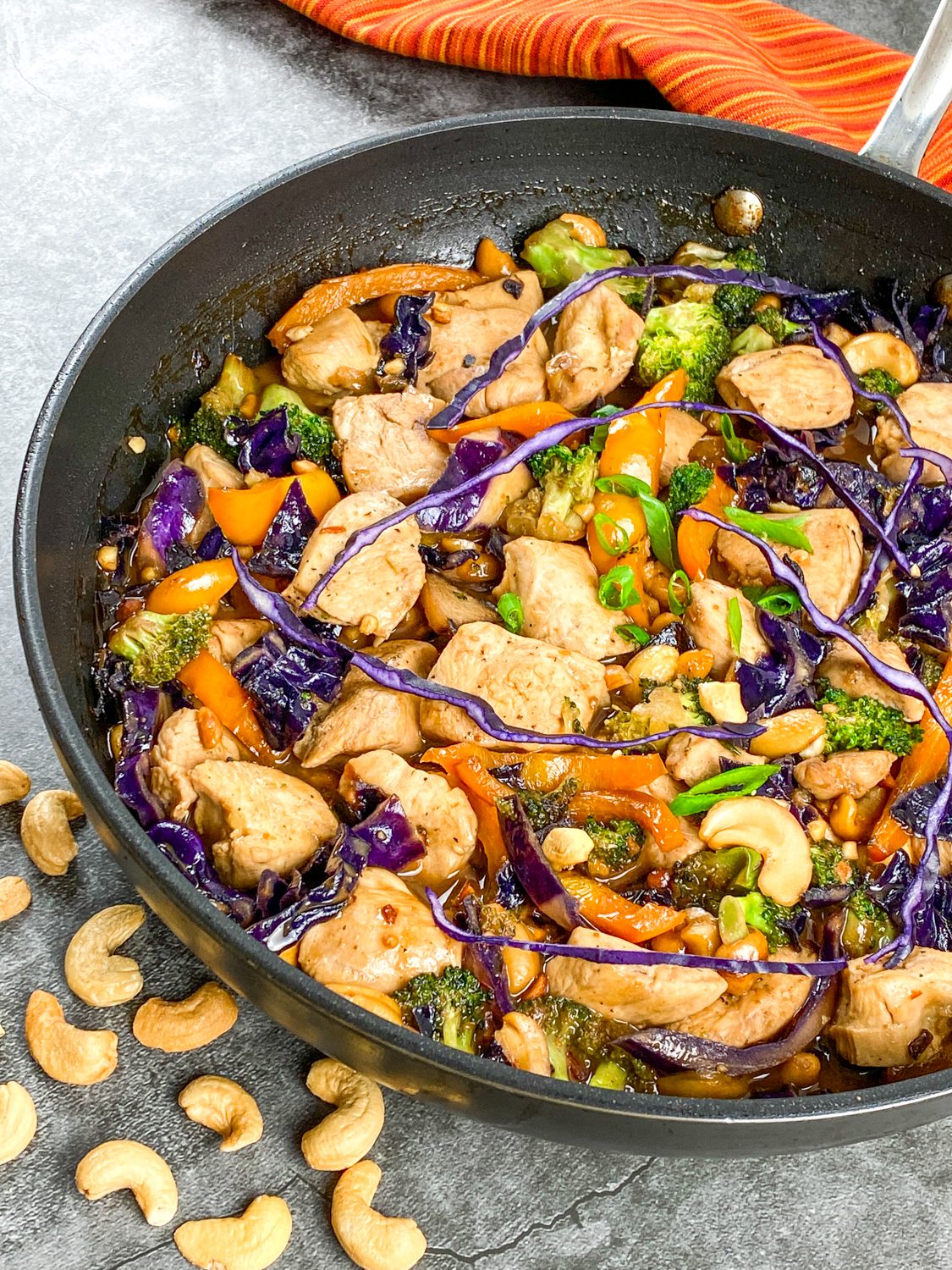
This version keeps everything you actually want, like tender chicken, glossy sauce, crunchy cashews, and vegetables with enough color to make you feel good about dinner. Then it swaps in cauliflower rice and a few smart ingredient choices to bring it in under 8 grams of net carbs per serving.
Links may be commissioned.
The sauce is built around sugar-free peanut butter, tamari, toasted sesame oil, and chili-garlic sauce. It gets reduced first, which concentrates the flavor and keeps it from making the stir fry watery.
The red cabbage is the move here. It cooks down just enough to get silky and slightly sweet while still holding some texture, and the color it adds to the pan is genuinely beautiful. Broccoli, orange bell pepper, and cashews round it out.
Start to finish in about 35 minutes. One pan. No regrets.
WHY YOU’LL LOVE THIS RECIPE
- Under 8g net carbs per serving — all the stir fry satisfaction, none of the carb hangover
- The sauce gets reduced first — concentrating the flavor before it hits the pan means every bite is properly coated, not drowned
- Red cabbage is the secret weapon — it adds beautiful color, a hint of sweetness, and a texture that holds up better than most stir fry vegetables
- One pan, 35 minutes — fast enough for a weeknight, good enough to make on purpose
- Naturally gluten-free — use tamari or coconut aminos and it works for everyone at the table

Low Carb Cashew Chicken Stir Fry with Red Cabbage
Ingredients
Method
- Add all sauce ingredients to a large skillet or wok and stir to combine. Bring to a boil over medium-high heat, then immediately reduce heat to just below medium. Simmer, stirring frequently, until the peanut butter is completely melted and the sauce has reduced by half, approximately 5–6 minutes. Transfer sauce to a bowl and set aside.
- Wipe out the skillet with a thick damp cloth. Add 1 tablespoon olive oil and heat over medium-high. Add the chicken and cook, stirring continually, until it develops some color and is nearly cooked through, approximately 4–5 minutes.
- Add the minced ginger and continue cooking, stirring continually, for 1 additional minute. Transfer chicken to a bowl and set aside.
- Add the remaining 1 tablespoon olive oil to the skillet. Add the red cabbage, broccoli, and orange bell pepper and cook, stirring continually, until the vegetables are crisp-tender and starting to develop color, approximately 2–3 minutes.
- Return the chicken to the skillet and stir in the chopped cashews. Pour the reduced sauce over the top and stir to combine. Cook for 1–2 minutes until heated through. Do not overcook.
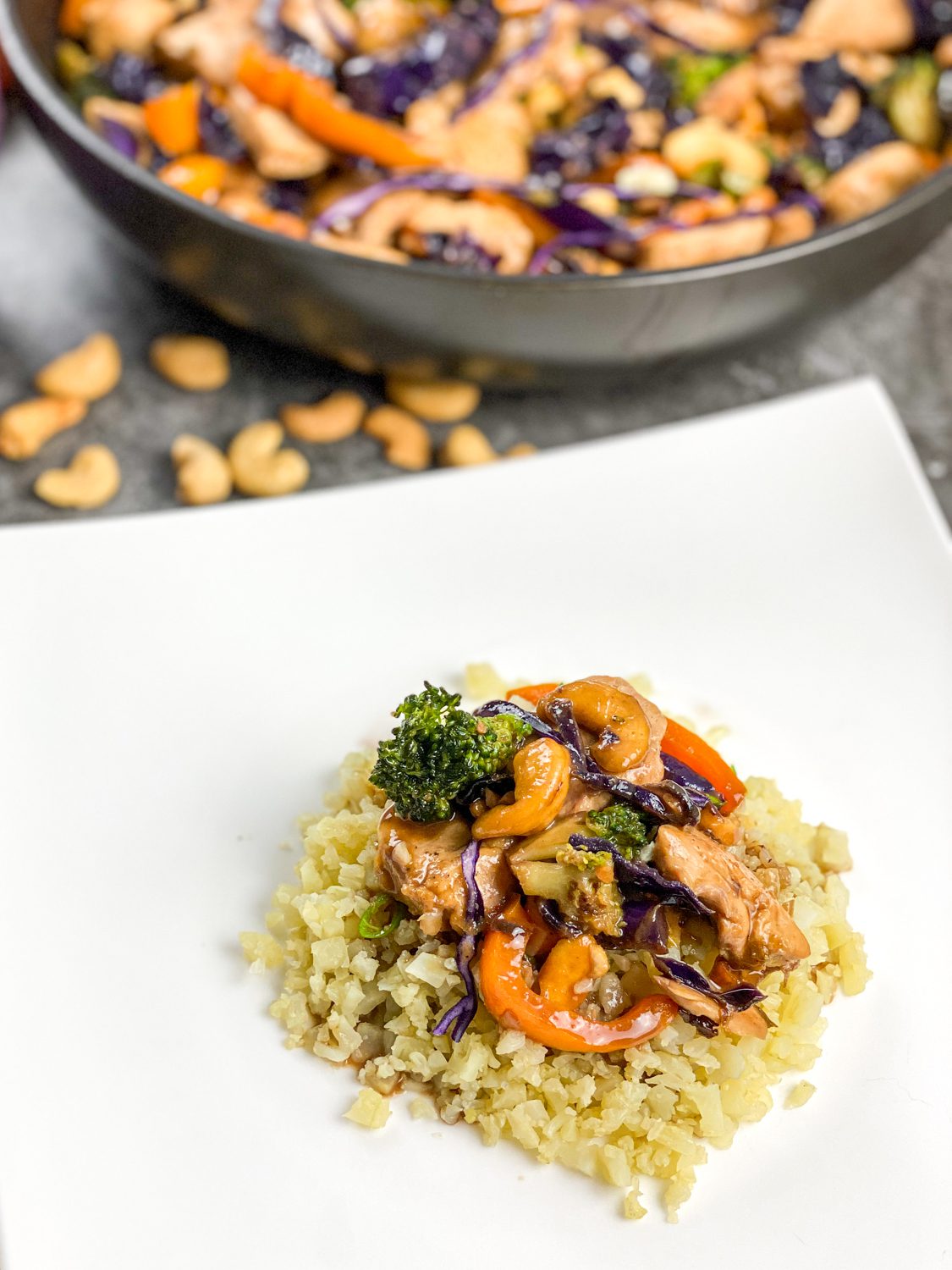
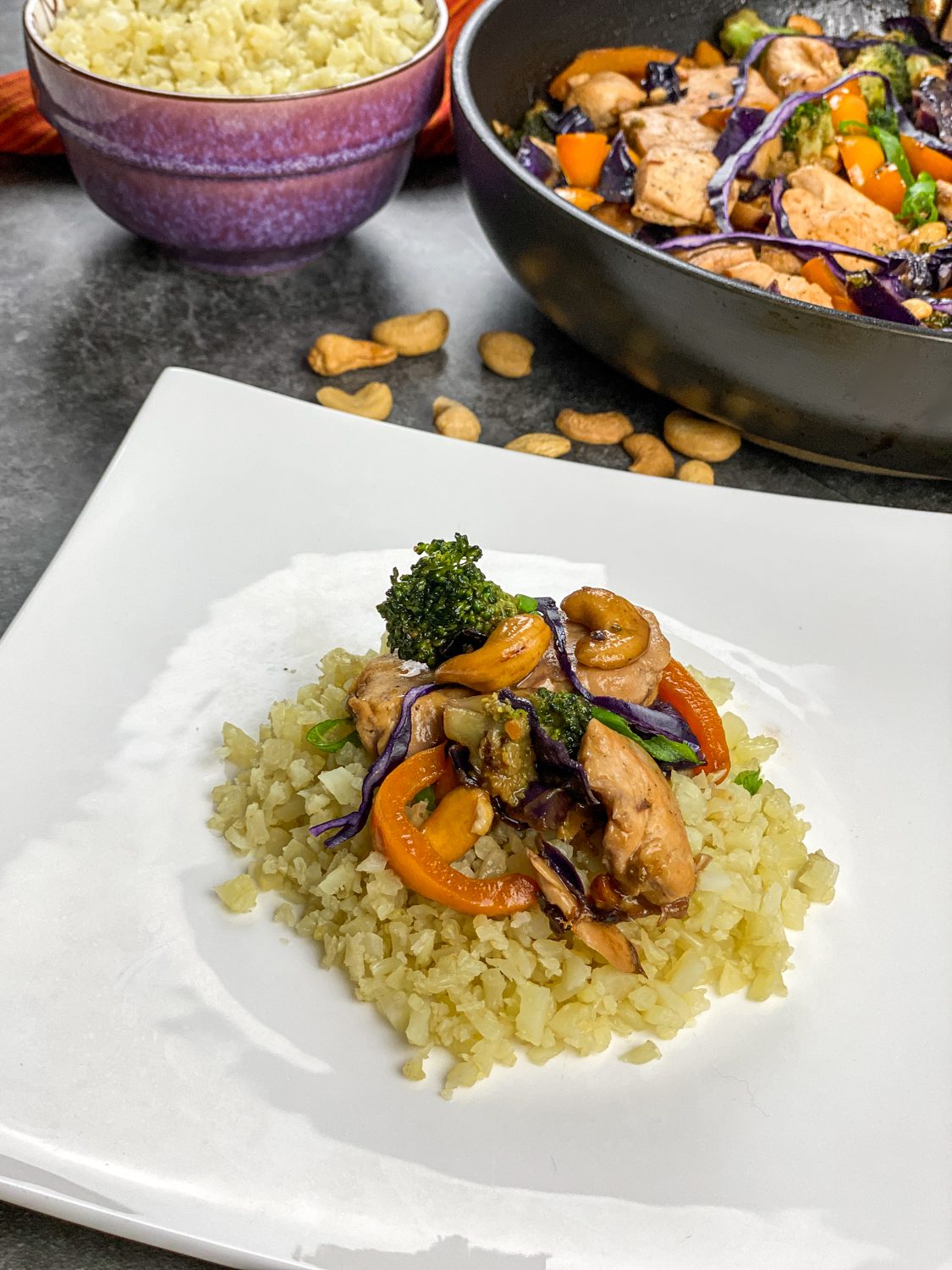
- Remove from heat. Taste and adjust seasonings as desired. Serve immediately over steamed cauliflower rice.
Notes
TIPS & VARIATIONS
- Don’t add salt while cooking. The tamari and chili-garlic sauce bring enough sodium. Taste at the end and adjust only if it needs it. It usually won’t.
- Reduce the sauce first, every time. Skipping that step and pouring unreduced sauce directly into the stir fry will water everything down and dilute the flavor. The extra 5–6 minutes is worth it.
- Don’t overcrowd the pan. If your skillet isn’t large enough, cook the chicken in batches. Crowding drops the pan temperature and you end up steaming instead of searing.
- Mise en place matters here. The actual stir fry moves fast once it starts. Have everything prepped, the sauce made, and all your bowls ready before you turn on the heat.
- Swap the vegetables. Snap peas, mushrooms, bok choy, or zucchini all work well in place of or alongside the broccoli and cabbage.
- Coconut aminos instead of tamari gives a slightly sweeter, less salty result and makes this completely soy-free.
- Regular rice works too if you’re not keeping it low carb. The sauce and stir fry are the same either way.
SHOP THIS RECIPE
- Sugar-free chili-garlic sauce — the one called for in this recipe; update to suppersage-20 tag before publishing
- Tamari — or coconut aminos for a slightly sweeter, soy-free option
- Toasted sesame oil — toasted, not plain; the flavor difference is significant
- Large skillet or wok — you need room to stir without everything ending up on the stove. These are the pans I use at home.
- Cauliflower rice — the 12 oz. steam-in-bag kind makes this genuinely weeknight-fast
SERVING SUGGESTIONS
Serve immediately over steamed cauliflower rice to keep it low carb, or regular rice if you’re not carb conscious. This dish doesn’t hold well once it’s off the heat, so have everything ready before you start. Leftovers reheat well the next day in a skillet over medium heat with a splash of water or tamari to loosen the sauce. For a full spread, this pairs well with a simple cucumber salad or miso soup if you want to round out the meal.
STORAGE
Store leftovers in an airtight container in the refrigerator for up to 3 days. Reheat in a skillet over medium heat with a small splash of water or tamari to revive the sauce. The cauliflower rice is best stored separately if possible. It tends to absorb the sauce and get a bit mushy if left together overnight.
Frequently Asked Questions
Can I use regular soy sauce instead of tamari? Yes. Standard soy sauce works as a 1:1 substitute. Tamari is gluten-free and slightly richer in flavor, which is why it’s called for here. Coconut aminos is another good option if you’re avoiding soy entirely; it’s slightly sweeter and less salty, so taste the sauce before finishing.
What’s the difference between tamari and coconut aminos? Tamari is a Japanese soy sauce. Darker, richer, and less salty than regular soy sauce, and typically gluten-free. Coconut aminos is soy-free, made from fermented coconut sap, and has a slightly sweeter, milder flavor. Both work well here; coconut aminos will produce a slightly less savory sauce.
Can I use natural peanut butter instead of sugar-free? Yes. Natural peanut butter (just peanuts and salt) works fine. Regular peanut butter with added sugar will increase the carb count slightly but won’t affect the cooking process.
Why do you reduce the sauce separately before adding it to the stir fry? Two reasons: it concentrates the flavor significantly, and it prevents the stir fry from getting watery. Adding unreduced sauce directly to a hot pan full of vegetables releases extra liquid and dilutes everything. The extra few minutes upfront makes a real difference in the final dish.
Can I use a different sweetener instead of Swerve? Yes. Any granular sugar substitute that measures like sugar works here. Erythritol, monk fruit sweetener, or allulose are all good options. Avoid liquid sweeteners as they’ll change the consistency of the sauce.
Is this recipe keto-friendly? At 7.45g net carbs per serving it’s on the higher end for strict keto but works well for low-carb eating. The cashews and vegetables account for most of the carbs. Reducing the cashews slightly or swapping for hemp seeds would bring it down further if needed.
WHY THIS RECIPE WORKS
Reducing the sauce before it ever hits the stir fry is the step that separates this from most weeknight versions. A thin sauce poured over hot vegetables immediately starts pulling moisture out of everything and you end up with a watery pan and diluted flavor. Reducing it first means it’s already thickened and concentrated when it goes in, so it coats rather than floods.
Cooking the chicken separately and setting it aside keeps it from overcooking while the vegetables get their time in the pan. Stir fry moves fast and different components need different heat and time. Trying to cook everything together at once is how you end up with rubbery chicken and raw cabbage.
The red cabbage is worth calling out specifically. Most stir fry recipes use green cabbage or skip it entirely, but red cabbage holds up better at high heat, picks up the sauce beautifully, and adds a color contrast to the pan that makes the finished dish look genuinely impressive. The 2–3 minutes of high heat takes the raw edge off while keeping enough texture to stay interesting.
Other Low Carb Dinners You’ll Love
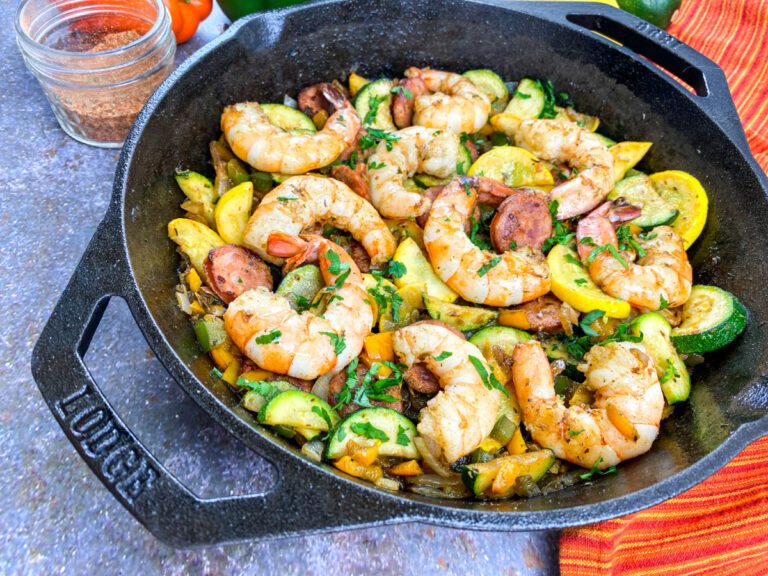
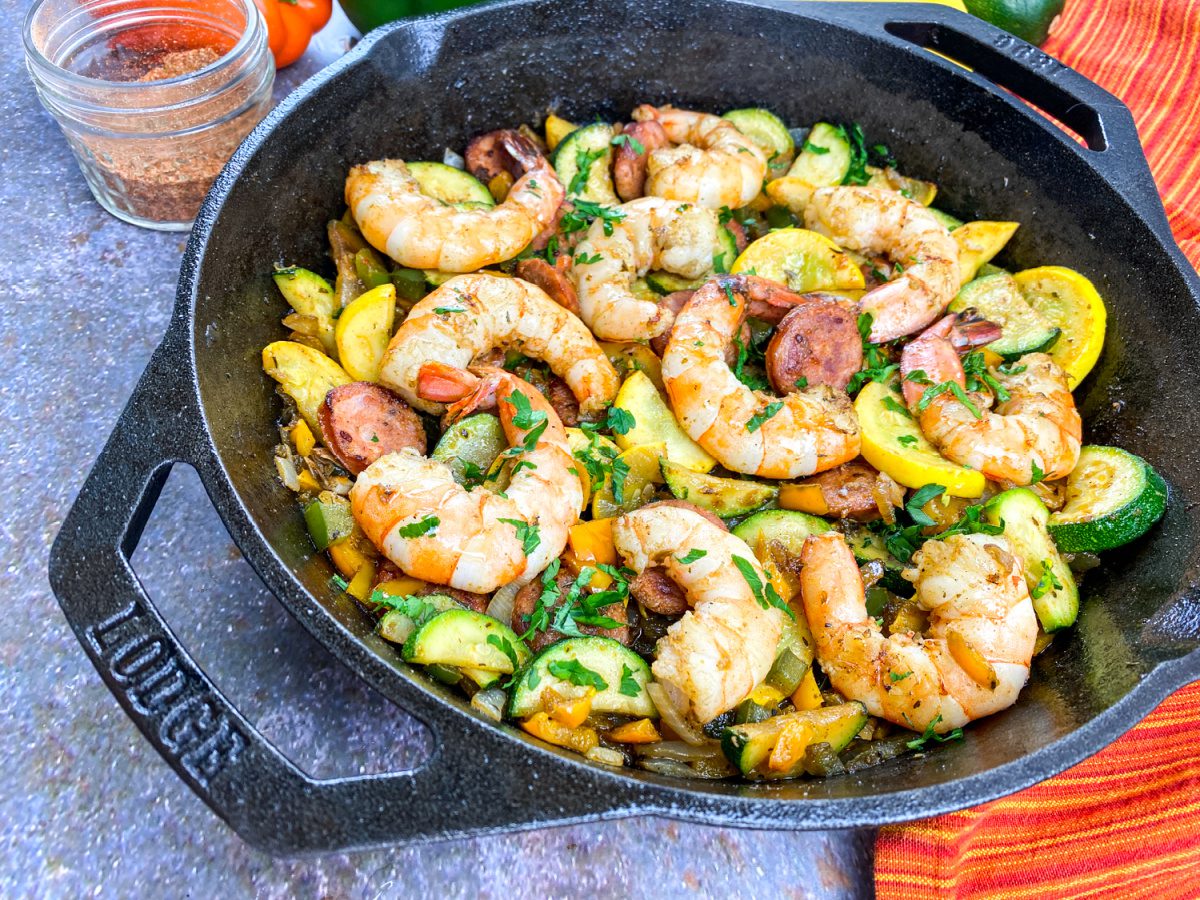
- Cajun Shrimp & Vegetable Skillet (pictured) — One pan, 30 minutes, bold Cajun flavor. Naturally low-carb and gluten-free.
- Instant Pot Chicken Enchilada Soup — All the enchilada flavor in a hearty low-carb soup. Ready in 30 minutes.
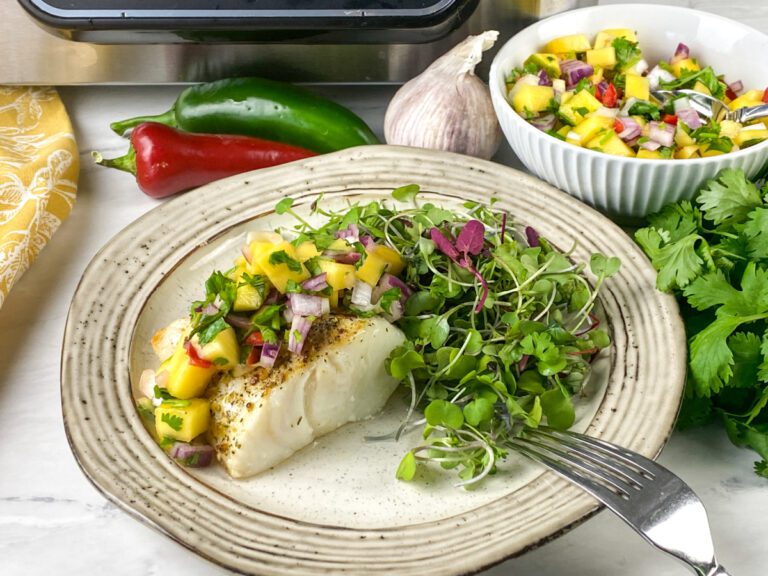
- Air Fryer White Fish with Mango Salsa — Light, healthy, and on the table in 20 minutes. The mango salsa makes it.
- Instant Pot Pork Carnitas — Fall-apart tender with crispy edges. Skip the tortillas and it’s a low-carb win.
- Sheet Pan Steak Fajitas — One pan, 30 minutes, and all the fajita flavor without the fuss.